
 |
| 
Finding Balance: Friction and performance in today’s workplaces
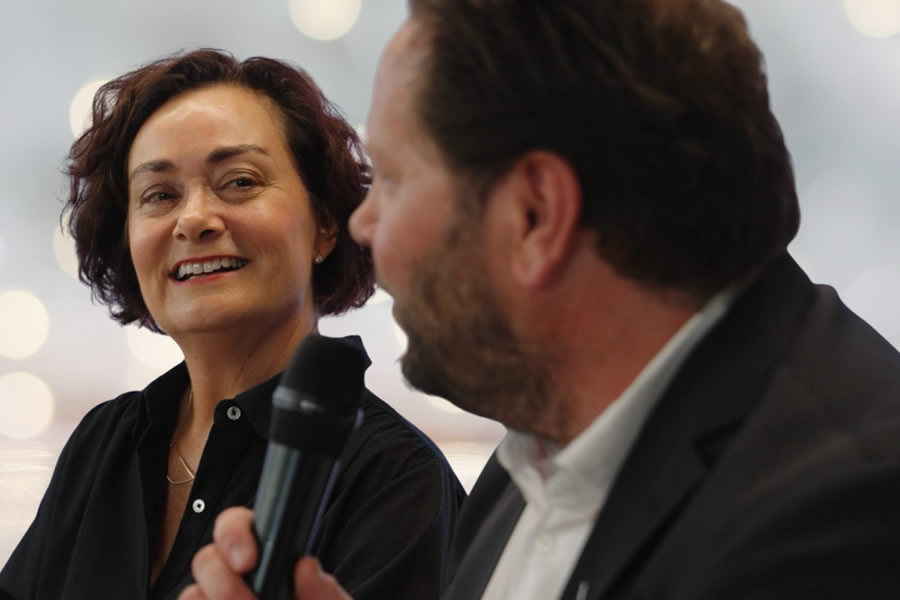
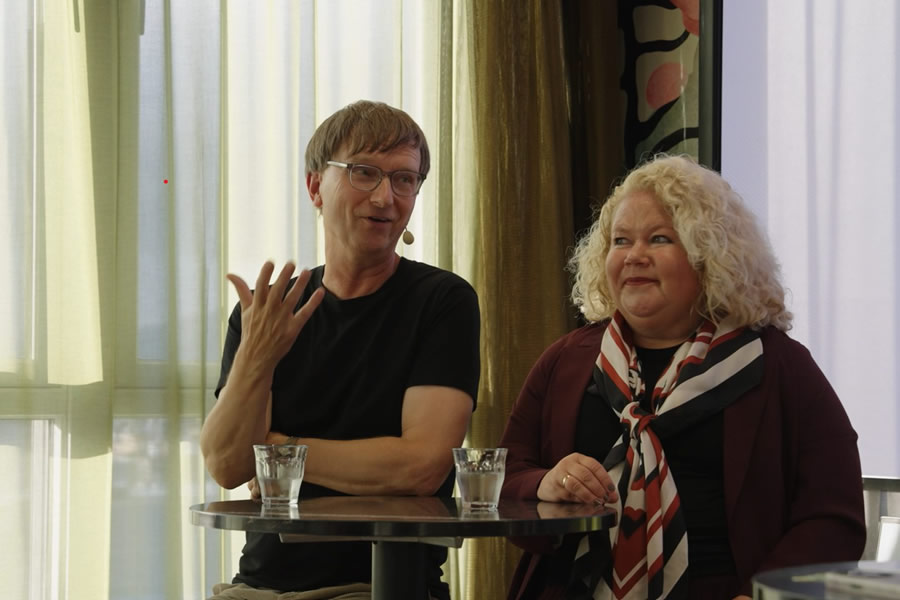
How do organizations thrive in a world of relentless complexity, rapid technological change, and shifting human behavior? That was the central theme of Thon Talk on 4 September, hosted by Thon Hotels at the Thon Hotel Panorama. The event brought together two very different yet complementary perspectives: Britt Otterdal Myrset, Managing Partner at Deloitte Consulting, and Øyvind Kvalnes, Professor of Organizational Behavior at BI Norwegian Business School.
Their insights painted a vivid picture of today’s workplace challenges, from leading in what has become known as a “VUCA world” (volatile, uncertain, complex, and ambiguous), to mobilizing what Kvalnes calls “friendly friction.”
The corporate arena: Deloitte’s perspective
Myrset grounded her talk in the organizational realities of Deloitte, which handles 200 – 300 new onboardings each year across four generations of employees with differing expectations about work. In a recent profile in Dagens Næringsliv, fellow Deloitte leader Cecilie Flatum captured this challenge: “Everyone must be treated differently, so that everyone has the same opportunity.”
Myrset expanded this thinking through an ecosystem metaphor: workplaces today bring together cold bodies (technology), warm bodies (partners and collaborators), and hot bodies (employees). To perform in such an environment, leaders must orchestrate these elements while facing paradoxes such as stability versus agility, automation versus human potential, and control versus autonomy.
Citing Deloitte’s annual Human Capital Report, she noted that while the pandemic taught us to act with incomplete information, many organizations have since become “paralyzed,” torn between competing priorities. The statistics underline the stakes:
- 61% of leaders admit they are not ready to run a company in an AI-driven world.
- Yet only 23% of organizations report having a clear AI strategy.
- And 75% of HR leaders believe the middle-management role must transform—though it remains critical.
For Deloitte, the key lies in cultivating arenas for safe disagreement. Myrset described how her leadership team creates psychological safety, sometimes symbolized by a toy elephant placed at the table to make it “permissible” to discuss the proverbial elephant in the room. The firm also runs “sounding boards” with employee representatives across units, ensuring diverse generations are heard before major initiatives are launched.
“Disagreement is not just tolerable- it is necessary. Otherwise, you stagnate and someone else disrupts you.” Britt Otterdal Myrset, Managing Partner at Deloitte Consulting
Practical methods extend to 24‑hour leadership offsites and even lighthearted practices like sharing an IKEA plush elephant or recalling the “two‑minute mosquito” interruptions that sap leaders’ energy. These rituals foster openness while acknowledging the small frictions of daily work.
Performance, Myrset emphasized, is not just about technical skills or systems, but about cultivating a feedback culture. Using tools like the Business Chemistry test, Deloitte helps teams map not only strengths but blind spots, encouraging diversity of roles: drivers, pioneers, guardians, and integrators. This helps ensure balanced decision-making and healthy team dynamics. “If everyone is a pioneer,” she reminded the audience, “then no one is keeping track of the numbers.”
Finally, Deloitte draws inspiration from sports, partnering with Norway’s Olympic movement to better understand what builds a winning culture. “Disagreement is not just tolerable,” Myrset concluded, “it is necessary – otherwise, you stagnate and someone else disrupts you.”
The philosophical perspective: Øyvind Kvalnes
If Myrset provided the view from corporate leadership, Professor Kvalnes offered reflections rooted in philosophy and organizational behavior. His storytelling began with what he called “the silence mystery.” In one example, a student watched quietly as his professor mistakenly drank from the student’s water bottle for an entire lecture. Why do people remain silent even when they clearly see something wrong?
For Kvalnes, this mystery plays out in workplaces everywhere. Employees hesitate to speak up out of fear of embarrassment, authority, ridicule, or cultural norms that discourage contradiction. In some cases, silence is tactical: “If I speak up, I’ll just be given more work.” The result is what he describes as a “handlingslammelse” – a paralysis that prevents necessary dialogue.
This connects to themes in his book Friksjon, where he distinguishes between “friksjonsangst” (the fear of healthy confrontation) and “vennlig friksjon” (friendly friction). Too often, criticism is delayed, arriving as a sharp email long after the moment has passed, sometimes escalating into formal whistleblowing when it could have been resolved in conversation. What workplaces need, Kvalnes argued, is the courage to address issues openly and face-to-face, in an atmosphere of respect.
“What makes people choose silence, even when they have something important to say and the opportunity to say it? Fear of embarrassment, authority, ridicule, or simply being overloaded with work.” Professor Kvalnes, Professor of Organizational Behavior, BI Norwegian Business School.
Citing philosopher Arne Næss, he reminded the audience: “In an atmosphere of friendliness, one can endure much from others.” The middle ground between excessive politeness (where bad ideas persist unchallenged) and excessive confrontation (where listening ceases) is where progress happens.
Kvalnes closed with a call to normalize constructive dissent, not as the burden of one outspoken individual in a team, but as a shared responsibility. Friction, he insisted, need not be destructive. In fact, it, it can be the very force that prevents organizations from drifting into complacency.
A Shared Message
By the end of the session, it was clear that both speakers, though coming from different backgrounds, pointed to the same truth: thriving in today’s workplaces requires both courage and care. Deloitte’s structured practices and BI’s philosophical framing together underscored that innovation and performance emerge when opposing views are not only tolerated but welcomed.
The Thon Talk reminded the British Norwegian Chamber of Commerce community that the competitive edge in today’s VUCA world does not lie in avoiding conflict. Instead, it lies in cultivating the right kind of friction – open, respectful, and human.
Authored by: Marianne, Haugland Hindsgaul, Team Leader Corporate Sales, Thon Hotel and Board Member of the British Norwegian Chamber of Commerce